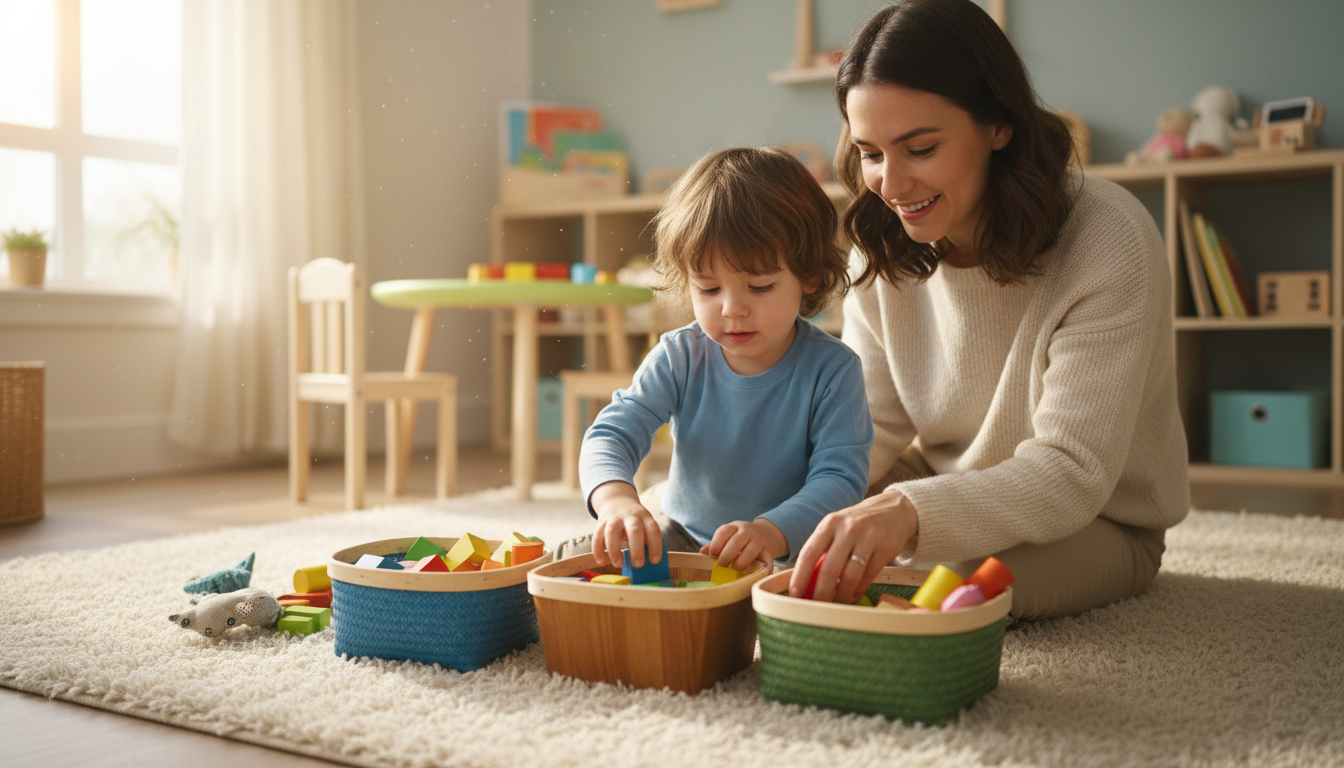
Why This Approach Works for Busy Families
Most cleanup advice assumes you have time for elaborate reward charts, perfectly labeled bins, and patience that doesn't run out at 6pm. This book recognizes that progress—not perfection—is what creates lasting change.
The games in this book take minutes, not hours. They work in the middle of the afternoon rush, on tired evenings, and on the days when nothing is going according to plan.
Sound Familiar?
These are some of the most common cleanup challenges — and how the games address them.
The Overwhelmed Child
Your child looks at the messy room and simply freezes or cries. This is not defiance — it's an executive functioning challenge. The room looks too big to tackle. Cleanup games break it into tiny, manageable steps.
The Transition Struggle
Moving from play to cleanup is a major cognitive shift for young children. Games ease this transition by making the endpoint feel like fun, not a loss.
The Power Struggle
"You told me to, so I won't." Autonomy matters to children. Cleanup games build in choice — which color, which timer length — so children feel a sense of ownership over the task.
Building Long-Term Habits
When cleanup feels rewarding, children repeat it. Over time, the games become less necessary as genuine habits take hold — the neural pathways were built through joy, not dread.
Quick-Start Tips
Before you dive in, keep these in mind.
Start with one game, one room, one time of day.
Keep sessions short — 5 to 10 minutes is plenty.
Praise effort and participation, not perfection.
Let your child help choose the game when possible.
Be consistent — same time each day builds routine faster.
Join in. Cleanup is more fun together.
Ready to Make Cleanup Fun?
Start with 3 free games — no email required for a first look.
See the Free Games